
« Micro Drama is not an extended TV commercial. Don’t just cut a long-form film or TV series into short episodes. »
One of the biggest mistakes Western companies make, says Amber Li, Head of Marketing at RisingJoy, is approaching micro dramas with a television mindset.
The format follows an entirely different storytelling grammar. Traditional television has time to introduce multiple characters, build subplots and slowly develop emotional relationships. Micro Dramas operate under very different conditions. « The number one rule for micro drama is three seconds, » Li explains. « If you cannot get attention in three seconds, users swipe away. » That changes everything – from scriptwriting and editing to character development and pacing. While television often rewards complexity, micro dramas demand clarity.
Li believes another common mistake is trying to introduce too many storylines. « The audience only cares about the lead character. They don’t care about everyone else. » Successful micro dramas establish emotional investment immediately. Whether the emotional driver is romance, revenge, suspense or wish fulfilment, every creative decision – including brand integration – reinforces that central feeling.
Three Rules for Natural Brand Integration
According to Li, successful branded bdramas follow three simple principles. First, products should have a genuine function within the story. Second, the product should reinforce the emotional journey of the protagonist. Finally, audiences should never feel like they’re watching an advertisement. « People don’t watch micro drama as an ad, » Li says. « They watch it as a drama. »
Branded micro dramas have attracted brands across beauty, food and beverage, fashion, retail and lifestyle services. FMCG companies were among the earliest adopters, while global brands including P&G, Starbucks and KFC have also begun experimenting with the format to engage younger audiences and drive sales.
Li says the most successful campaigns integrate products so naturally that viewers remember the story before they remember the advertising. One example is Meituan’s branded micro drama My Puppy Boyfriend, created to promote the company’s pet care services.

The story follows a dog that transforms into a man. When the heartbroken protagonist decides he wants to stop loving the female lead, another dog recommends visiting a pet hospital. The audience discovers Meituan’s pet services organically through the storyline, making the brand integration feel like part of the narrative rather than an advertisement. « It’s very natural and funny, » says Li, explaining why audiences embraced the campaign.
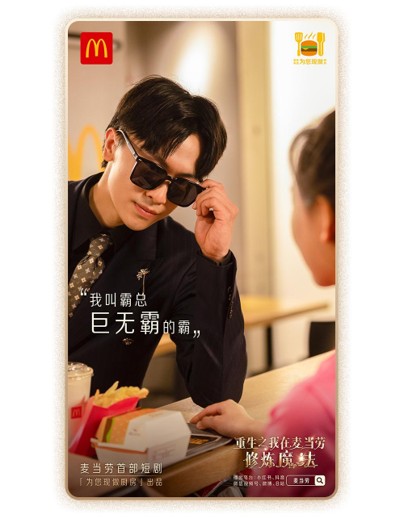
The same philosophy is driving campaigns for global brands including McDonald’s. The fast-food giant has increasingly experimented with original fictional stories built around its brand, moving beyond conventional commercials into entertainment formats designed for audience engagement.
Titles such as Reborn as a Snack Vendor and I Became a Billionaire generated 1.2 billion views, while My Secret Flash-Married CEO Picks Me Up From Work attracted 890 million views. Built around exaggerated emotional hooks – a defining characteristic of Chinese micro dramas – McDonald’s brand purpose is seamlessly integrated into the entertainment experience.
But the real difference lies not only in how these stories are created. It is also in how their success is measured.
Entertainment Meets Performance Marketing
What makes China’s branded micro drama ecosystem particularly fascinating isn’t simply its scale – it’s how success is measured. Unlike traditional advertising campaigns that prioritise impressions or reach, Chinese brands focus on commercial outcomes. « The first goal is always conversion to sales, » Li explains. « The second is reaching new audiences. »
According to Li, the three most important KPIs are conversion and sales revenue, Episode 1 retention rates above 40%, and whether audiences continue watching at least three consecutive episodes. For Western entertainment companies used to separating creative success from commercial performance, this represents a fundamental mindset shift.
This performance-driven mindset also explains why experimentation happens at remarkable speed. « Test is more important than research, » Li says. Instead of spending months refining a concept, many studios release two different versions of the opening episode simultaneously, using A/B testing to identify which hook resonates before committing to a full series.
For brands entering the space, Li’s advice is refreshingly straightforward: « Small. Efficiency. Test. » Start with a small budget, focus on a single product and one clear emotional theme, learn from what already works, and iterate quickly using audience data rather than assumptions. « Test is more important than the research, » Li says.
What the TV Industry Should Learn
For broadcasters, producers and marketers, Branded micro dramas should not be viewed as a replacement for television. They represent a new branch of screen storytelling – one built around mobile-first viewing habits, rapid audience engagement and measurable commercial outcomes.
Perhaps that’s the biggest lesson from China’s micro drama boom. The future of Branded Entertainment will not be defined by shorter episodes. It will be defined by a different storytelling mindset – one where emotion comes before exposition, products become plot devices rather than interruptions, and success is measured not just by views, but by what audiences choose to do next.