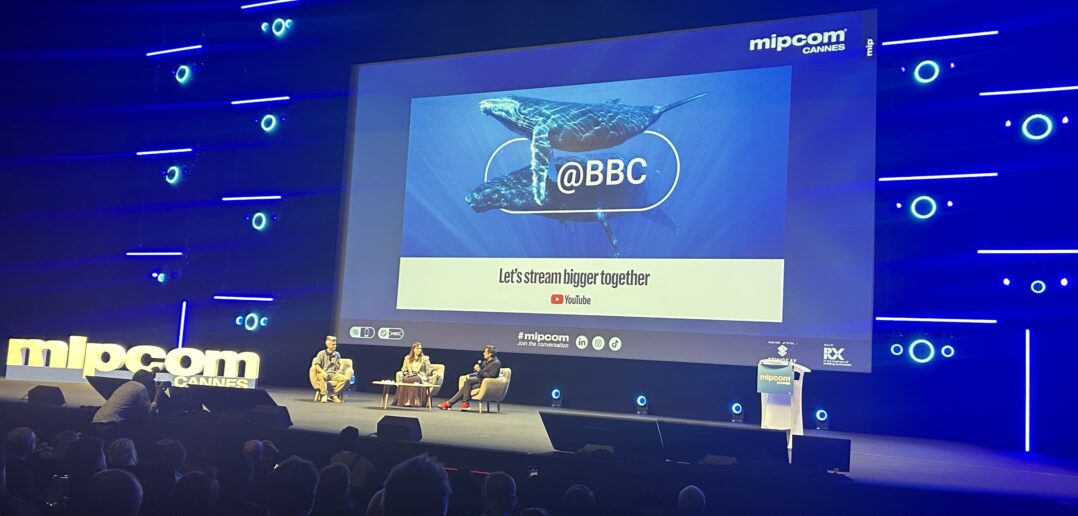
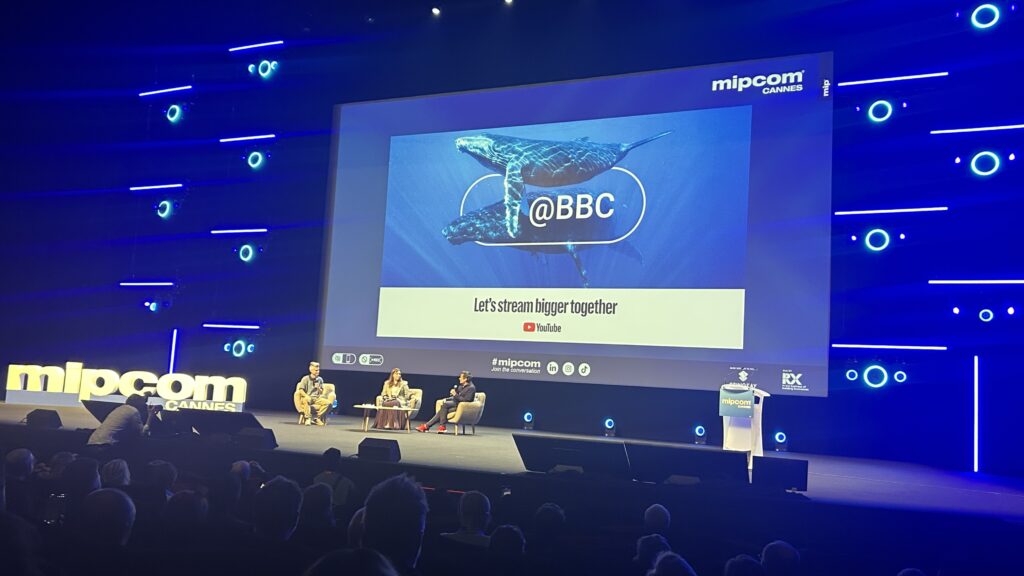
At MIPCOM, Jasmine Dawson, Senior Vice President, Digital at BBC Studios, highlighted during the YouTube keynote that they now have social-first sales teams. That may sound operational. In reality, it signals a structural shift: social distribution is no longer just marketing. It is becoming a revenue stream.
And companies operating in this space are already adjusting to that reality. “The boundaries between TV and digital no longer exist,” says Yiğit Doğan Çelik, CEO of Merzigo, which manages and monetises TV IP on YouTube and AVOD platforms.
He argues that platforms such as YouTube and Facebook now dominate the global media ecosystem, particularly on the TV screen, creating new distribution opportunities for premium content owners.
For producers and distributors, that is not a philosophical statement. It is a commercial one. If audiences are consuming premium content on connected TVs via YouTube, then AVOD becomes part of the formal windowing conversation.
Discoverability Is the New Battleground
The scale of competition is unprecedented, though. “The biggest challenge today is discoverability with millions of videos uploaded every hour,” Çelik notes. “In order to be successful in building reach, awareness and ultimately revenue, a smart optimisation and monetisation strategy is required.”
In other words, just uploading your content is no longer enough.
Historically, many broadcasters treated YouTube as a promotional outlet – clips, short-form highlights, occasional catch-up episodes. But managing full libraries at scale requires something closer to broadcast discipline.
Merzigo describes its approach as treating YouTube “as a true broadcaster.” That means planning weekly programming schedules, optimising for watch time and adapting formats across multiple languages.
“We upload over 6000 unique videos a day from our library of partner content totalling over 400,000 hours,” Çelik says. “We want to make the complex simple and predictable for our partners.”, pointing to a combination of proprietary technology and a 24/7 global team managing over 5,000 channels across territories.
For broadcasters and distributors, the relevance lies less in the volume itself and more in what that scale enables: consistent programming, data-led optimisation and structured monetisation. If AVOD is now a defined revenue window, it requires editorial, commercial and technical specialisation.
Originals Signal a Primary Window
That logic is no longer limited to library exploitation. Increasingly, premium content is being developed with YouTube as the primary distribution environment rather than a secondary outlet.
Merzigo’s report on Qesma W Naseeb – a popular Arabic Reality TV show and social experiment focused on dating, produced exclusively for YouTube – illustrates how premium episodic content is being commissioned specifically for YouTube, with roll-out strategy and monetisation designed for the platform from day one.

For producers and Branded Entertainment teams, that shift affects how projects are commissioned, financed and integrated with sponsors. Structured publishing models, audience data and built-in monetisation allow brand integrations to sit within long-form series rather than as one-off activations.
The Market Is Moving
Recent developments across the industry reinforce this trend. For example, ITV has expanded its YouTube sales roster with Banijay Rights and Banijay UK, adding titles including Peaky Blinders, MasterChef and Would I Lie to You? to its commercial offering.
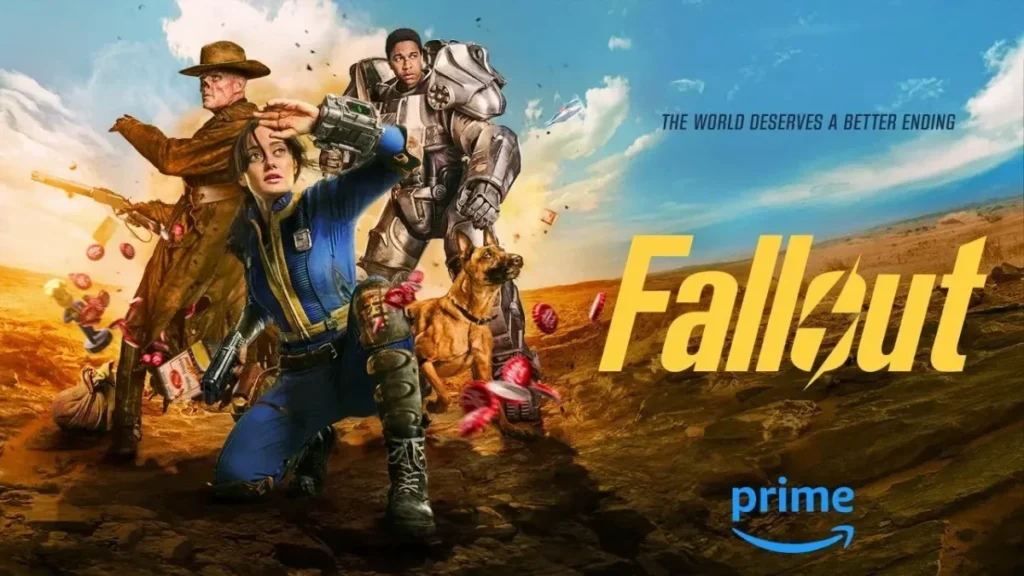
Meanwhile, Amazon made the first season of Fallout available for free on YouTube ahead of its next instalment, using AVOD as a sampling window to expand audience reach. These are structured commercial decisions, not experiments.
Çelik argues that rights holders who embrace a structured approach can unlock additional value from their libraries. “Our end-to-end service ecosystem, from channel management and content production to localisation, and rights protection gives a full service to broadcasters and distributors wanting to embrace AVOD,” he says. “We optimise every piece of content to unlock its full revenue potential delivering measurable results for our partners as the fight for attention increases.”
The Strategic Question for the Market
As broadcasters formalise social-first sales teams and integrate YouTube inventory into premium advertising conversations, AVOD is becoming embedded in the revenue infrastructure of TV IP.
For producers, distributors and Branded Entertainment teams, the question is no longer whether YouTube matters. It is whether AVOD is being treated with the same strategic discipline as linear and streaming – and whether the capability to operate it at scale exists internally or needs to be built through specialist partners.