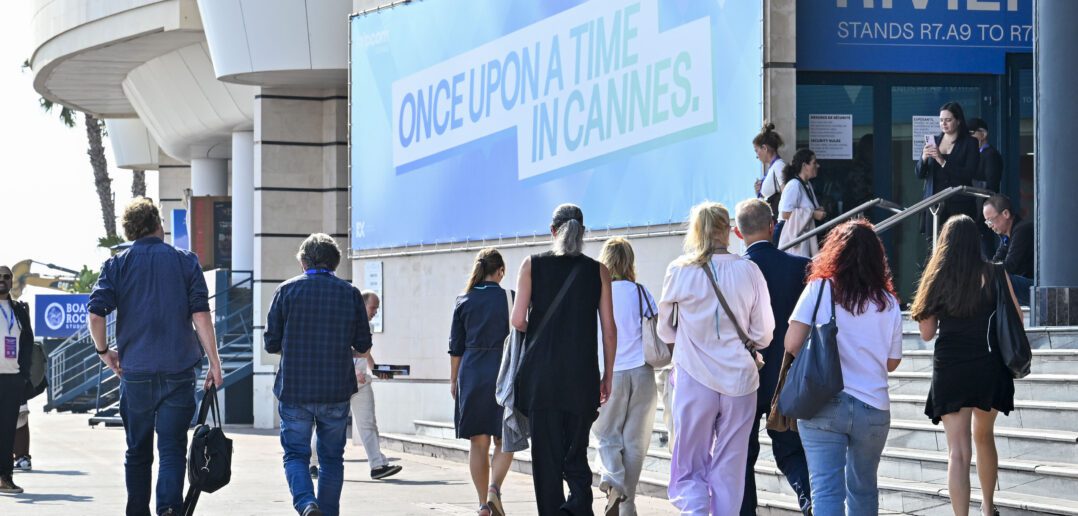
MIPCOM’s director Lucy Smith called 2025’s event “the biggest shift in a generation” and she wasn’t wrong. At MIPCOM and MIPJUNIOR you could feel it, the air had changed. YouTube wasn’t just on the Croisette, it WAS the Croisette and the name was heard in almost every panel, keynote and conversation.
Media markets have entered their Creator Economy era
Those of us who’ve spent much of our careers in kids media quietly savoured our ‘we’ve-been-living-this-for-years’ moment with our salads at Caffe Roma, and we sipped our rosé with wry smiles that the rest of the media industry is acknowledging creator-led content. Something that the kids audience has been embracing for over a decade.
You see kids (as hard to predict and monetise as they are), give us HUGE clues as to where media is heading. I’ve said it on too many podcasts to count; that kids are a bellwether. A bellwether for fandom, for distribution and for how content will be produced and commercialised. If you can figure out what they want, where they want it, how they want it and how much they value it – then you have a blueprint for your future business.
And that blueprint is becoming increasingly pressing, because the numbers tell a sad story. Commissioning continues to slide and broadcasters are scrambling for relevance with social-first audiences – the very ones on which their businesses will depend within a few years. And yet, here’s YouTube celebrating its 20th birthday with its FIRST major presence at MIPCOM, announcing partnerships with Banijay (an initiative called “Creators Lab”) and a celebration alongside BBC Studios of their partnership on BBC Earth.
Meanwhile, delegates at MIPJUNIOR saw the debut of a show written by Kevin Tran, a creator with six million YouTube subscribers who published his first manga in 2017, sold a million books, and only then landed a commission for ‘Ki & Hi in the Panda Kingdom’ from Canal Plus in France and RTBF in Belgium.
If MIPCOM typified general entertainment embracing out how to ‘think like a creator’, kids media has been building around them for years. OG disruptors like Jay Jeon showed the way with what eventually became CoComelon. In 2006 he set up a YouTube channel to entertain his kids, and by 2020 it was generating $120 million annually in revenue for Moonbug. They saw what traditional media missed, YouTube was more than distribution, it was data-powered R&D. Moonbug took creator IP and scaled them; they were figuring this stuff out in kids media while legacy media was debating whether YouTube mattered.
And Ms. Rachel? She filmed Songs for Littles in her apartment in 2019 without fancy animation. She had almost no budget, just research-backed speech and language techniques and genuine care for kids’ development – a creator driven by purpose and passion. Today she has 17+ million subscribers, a Netflix deal and has disintermediated TV’s relationship with parents. She doesn’t need a commissioner, she speaks directly to families, and many trust her more than they trust broadcasters.
Kids media was forced to adapt, because they have been hit hardest by ever-trickier economics. The shift towards ad-supported platforms highlighted a lack of incentive to invest in kids content because kids and their habits cannot easily be tracked – which is a problem when your advertisers demand data. COPPA restrictions cratered revenue for those that were publishing on YouTube to the point where some question whether the regulation does more harm than good.
The MIPJUNIOR sessions also made the foresight in the kids space clear (we like to think in the future in kids media). Greg Dray from Animaj stated that he is convinced that the next big children’s IP will come from a platform like Roblox. That is something I too have predicted for years and about which I have spoken many times. It won’t be Netflix, nor Disney, it will be Roblox.
Why?
Because we see where kids are spending increasing amounts of time (millions of years’ worth per quarter) and creators on Roblox are as famous, as powerful as Miss Rachel or MrBeast. As Chris M. Williams from pocket.watch also reminded; kids creators have long been incubators for IP and their ecosystem has produced hits that traditional commissioning would never dream of.
There’s no doubt the creator economy is an opportunity, as kids sector shows. Creators of IP like Claynosaurz and Silly Crocodile carved a hybrid model of free content for reach and then derived revenue elsewhere. They watched where kids watch, they learned and built multi-platform businesses that monetise without reliance on a single platform. It’s not easy, but if creators are disrupting general entertainment now, kids creators are on version 2.0 of the playbook.
In short, if you want to know where media transformation is heading go and talk to someone creating in the kids sector. Or better still, join us at the Kids Summit at MIPLONDON on Tuesday 24 February 2026 at the IET LONDON. You may hear from attendees about squeezed CPMs, fractured attention, platform dependence and audience relationships – and that’s fine, we need to have the tough conversations – but you will DEFINITELY hear about how to build cohesive IP across YouTube, Roblox, streaming, merchandise and more, as well as hear practical strategies on how control costs and monetise content using insight, flexible distribution and innovative production – which is pretty transformative in itself.
For more information visit the MIP LONDON website here.