Behind Brand Entertainment is a series of interviews with producers, studios, distributors and brand leaders exploring how brands and the entertainment industry are collaborating to develop, fund and scale premium content.
————————————————————————————————————————————–
As Aardman celebrates its 50th anniversary this year, the studio behind Wallace & Gromit and Shaun the Sheep is proving that legacy entertainment brands can still evolve – not by chasing trends, but by getting closer to audiences.
Over the last two years, Aardman has grown its revenue from brand and content exploitation by 30%, driven by a strategy focused on understanding audiences market by market and expanding how fans interact with its worlds.
“Audience expectations have changed,” says Emma Hardie, Board Director and Executive Commercial & Brand Director at Aardman. “Audiences want to interact with brands and feel part of them rather than just consume them.”
That philosophy is reshaping Aardman from a traditional animation studio into something broader: a participatory entertainment ecosystem spanning social media, live experiences, retail and branded storytelling.
From TV Characters to Global Companions
That audience connection has helped turn Aardman’s characters into global entertainment brands. Shaun the Sheep is now available in 170 territories, while Wallace & Gromit recently drew 21.6m viewers in the UK alone for their latest BBC Christmas special, plus becoming a Top 10 title in six territories on Netflix internationally.
Part of that success comes from the universality of Aardman’s storytelling. The studio’s signature mix of craft, comedy and relatable underdog characters translates across generations and cultures. “People really appreciate the tangibility and authenticity of what we do,” says Hardie. “Especially now, with the rise of AI-generated content.”
Internally, Aardman has also reorganised teams around audience insight and territory-specific strategies, bringing together licensing, content sales, digital and live experiences to better understand how fandom behaves differently across markets.
In Japan, for example, Shaun the Sheep has built a large adult fanbase through experiences and collectibles, while South Korea has become a major growth market for merchandise, with demand increasingly fuelled by social content and user-generated trends showcasing the products.
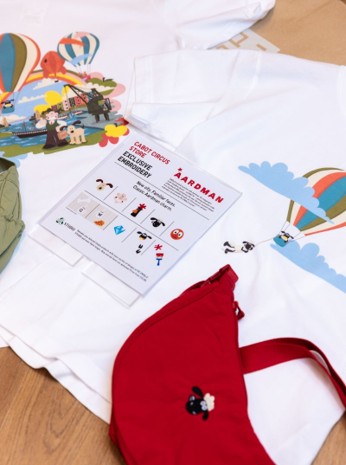
Aardman has also extended its reach through retail collaborations such as its partnership with Uniqlo, bringing its characters into limited-edition clothing collections that travel far beyond traditional media distribution.
Building Participation, Not Just Reach
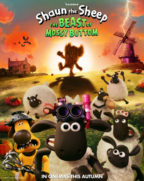
Aardman is increasingly shifting from reach to participation. For the upcoming Shaun the Sheep movie The Beast of Mossy Bottom, the studio launched a TikTok competition inviting fans to prove they were Shaun’s biggest supporter. The winner was transformed into an actual clay character appearing in the film.
The company also launched “The Clay Offs,” an audience voting initiative celebrating Aardman’s top characters across its 50-year history. The results are not just engagement drivers – they are also valuable audience insight. “We’re constantly learning from how fans engage with our characters,” says Hardie. “That feedback is shaping how we think about audience expectations.”
That philosophy extends into physical experiences, too. From immersive exhibitions in London to Shaun the Sheep attractions in Japan – where fans even get married at the themed farm park – Aardman is expanding its IP into real-world experiences that deepen emotional connection beyond the screen.
Why Aardman Started Animating for TikTok
One of the company’s most significant strategic shifts has been creating animation specifically for social media platforms. Historically, Aardman never produced original animation for digital-first channels. That changed with the creation of a dedicated Shaun the Sheep social animation unit producing platform-native content for TikTok and Instagram.
The results have been dramatic: total viewers increased to 5.2 million over 28 days, a 60% increase compared to the previous period. The channel also attracted 1.2 million new viewers to the brand (50% increase), generated a 78% increase in likes and added more than 52,000 new followers (50% increase).
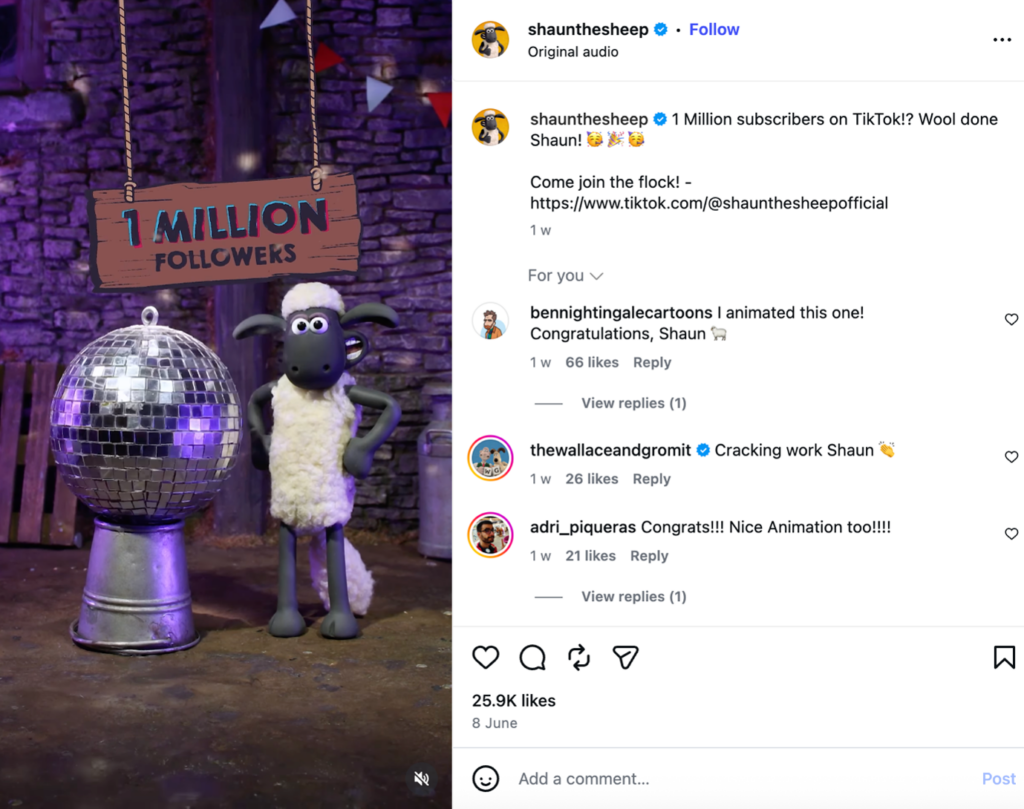
The content taps into meme culture, creator trends and platform behaviour while staying true to Shaun’s personality – turning the character into an active participant in Internet culture rather than simply a TV icon reposted online. “We didn’t want to just post clips from shows,” says Hardie. “We wanted to tell the right stories in the right way for the right platform.”
From Advertising to Entertainment Worlds
Commercial storytelling has also evolved. After more than 40 years creating advertising campaigns for brands, Aardman increasingly sees the future in long-term Branded Entertainment partnerships alongside transactional ads.
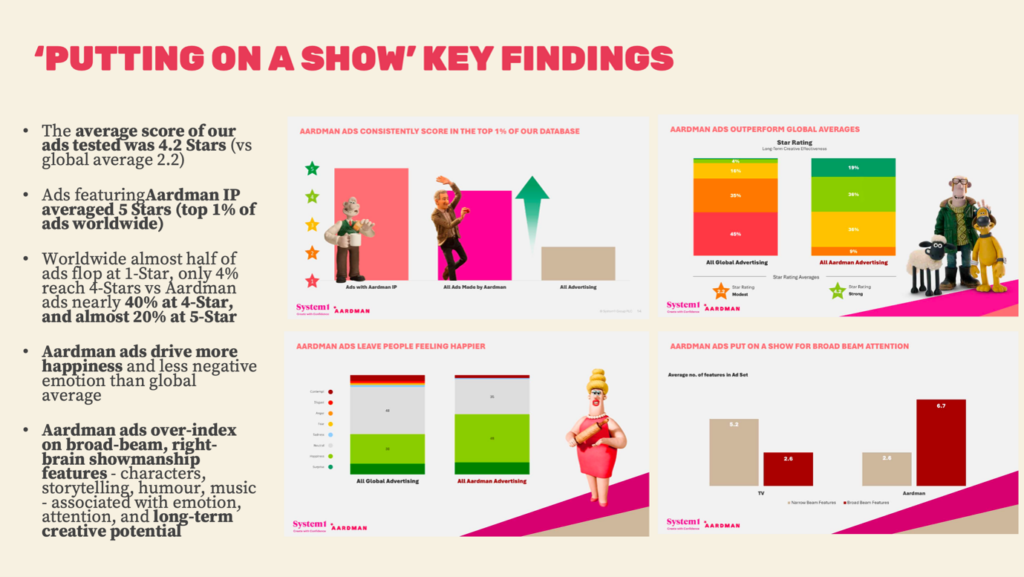
Recent collaborations include animated storytelling for Lego, campaigns shot entirely on iPhone for Apple and immersive branded experiences that blur the line between advertising and entertainment. Backed by effectiveness research, Aardman believes great storytelling can create measurable impact for brands. “The best advertising is about putting on a show,” says Hardie. “People want connection, characters and entertainment.”
At 50 years old, Aardman is proving that modern entertainment brands can no longer rely on passive audiences alone. Increasingly, success comes from building worlds audiences can interact with, personalise and feel part of – across every platform and touchpoint.